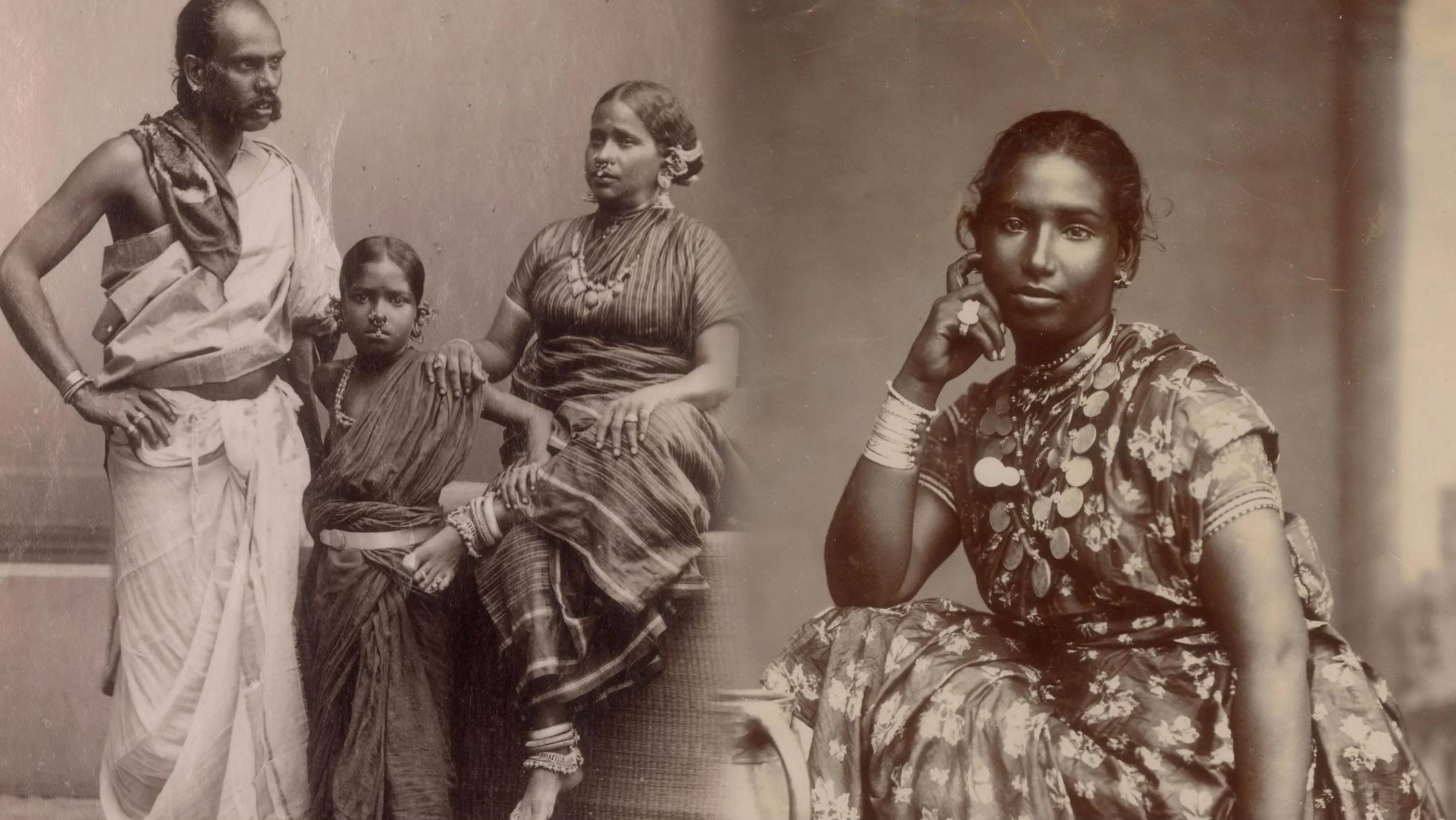
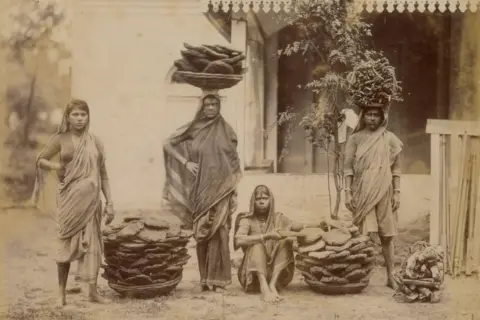
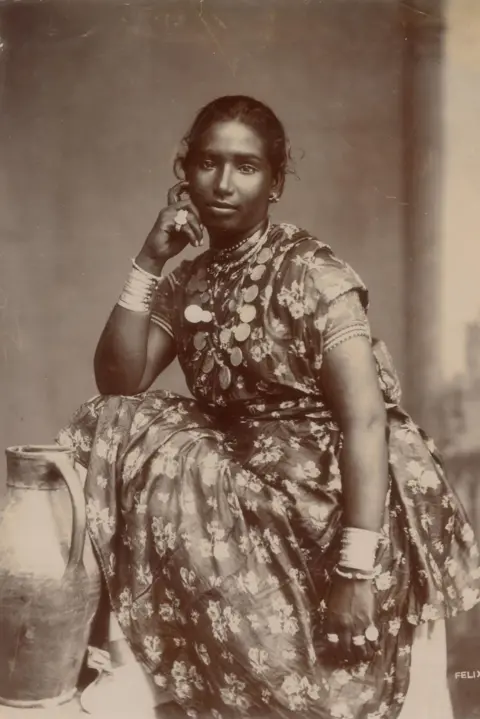
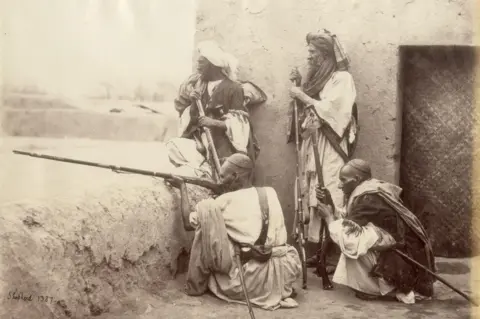
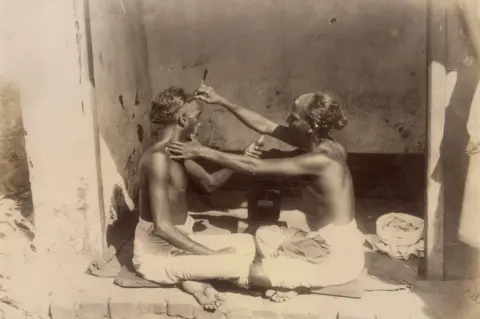
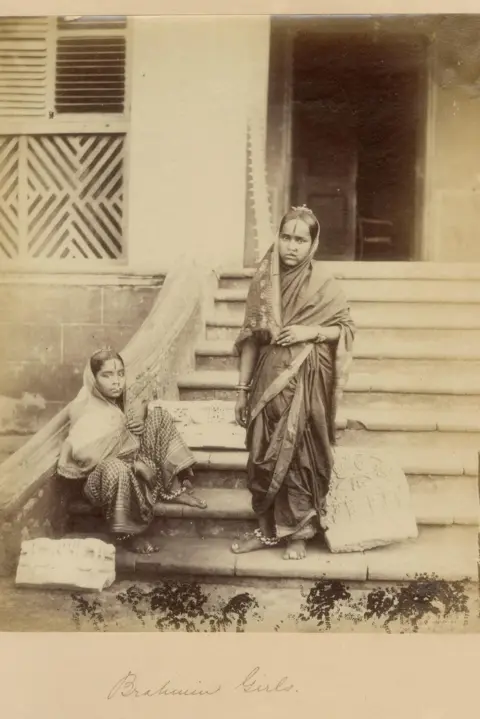
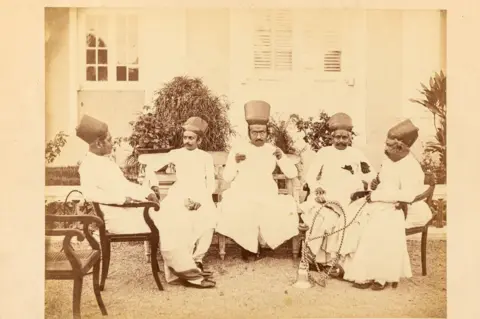
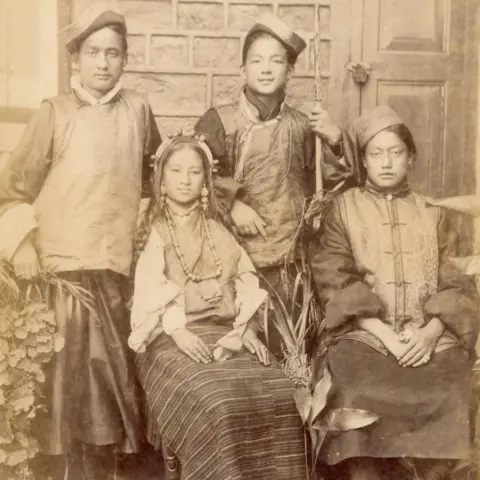
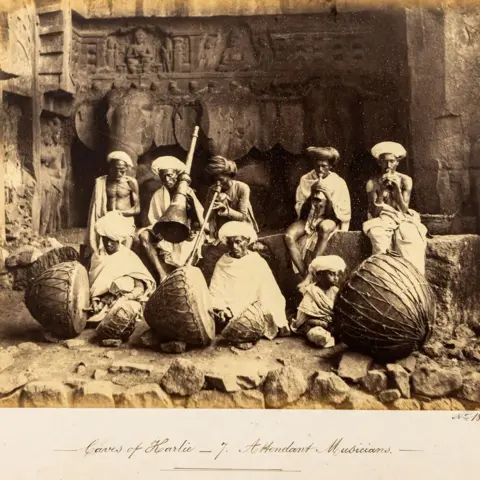
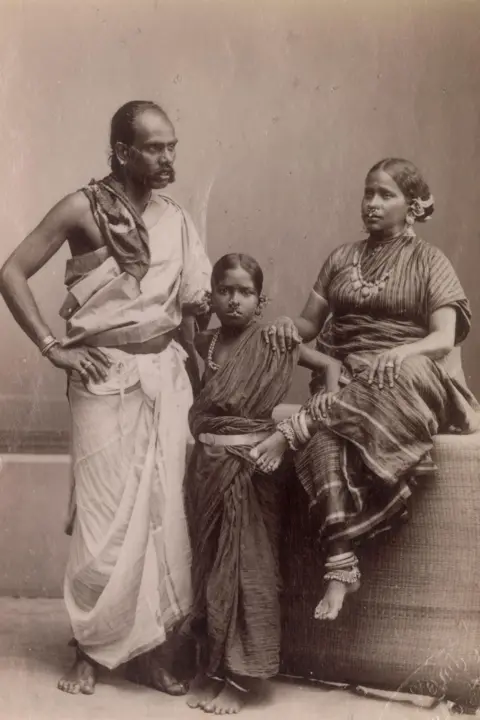
Women carrying cow dung cakes, Bombay, 1890, by Edward Taurines. Here, the women are presented in service to the household, engaged in domestic tasks typically performed within the home – but repositioned outdoors for the camera.Indian woman, photographed by Felix Morin, 1890. Women feature prominently in the photographs at the show. This carefully composed colonial-era portrait captures both the ethnographic gaze of the period and the formal elegance of early photography.This 1862 photograph – ‘Group of Afridis from the Khyber Pass’ taken by Charles Shepherd – shows men from a Pathan tribe the British described as “fiercely independent” found along the Afghan border.A street barber, by an unidentified photographer. Such images frequently captured street trades and everyday performances, turning ordinary labour into ethnographic subjects.William Johnson, a founding member of the Photographic Society of Bombay, published this image titled ‘Brahmani Ladies’ in the 1857 issue of The Indian Amateur’s Photographic Album. The accompanying text named the two women, describing them as young and intelligent, and noted that they were in Bombay – with their father’s encouragement and their husbands’ support – to study English at a mission school.A group of Parsis, possibly photographed by William Johnson, sit before a colonial bungalow – asserting their distinct identity through clothing and bearing, while occupying a colonial architectural world.A group of young Bhutias, 1890. The volume includes photographs of people from Sikkim, Bhutan and Tibet – regions beyond the British rule. The Lepchas, Bhutias and Tibetans were photographed by Benjamin Simpson.Musicians at ancient Buddhist rock-cut shrines in Maharashtra, photographed by Charles Scott, undated.An Indian family in Singapore, late 19th Century. Some images depict people from the Malay Peninsula, Singapore and Chittagong in Bangladesh.