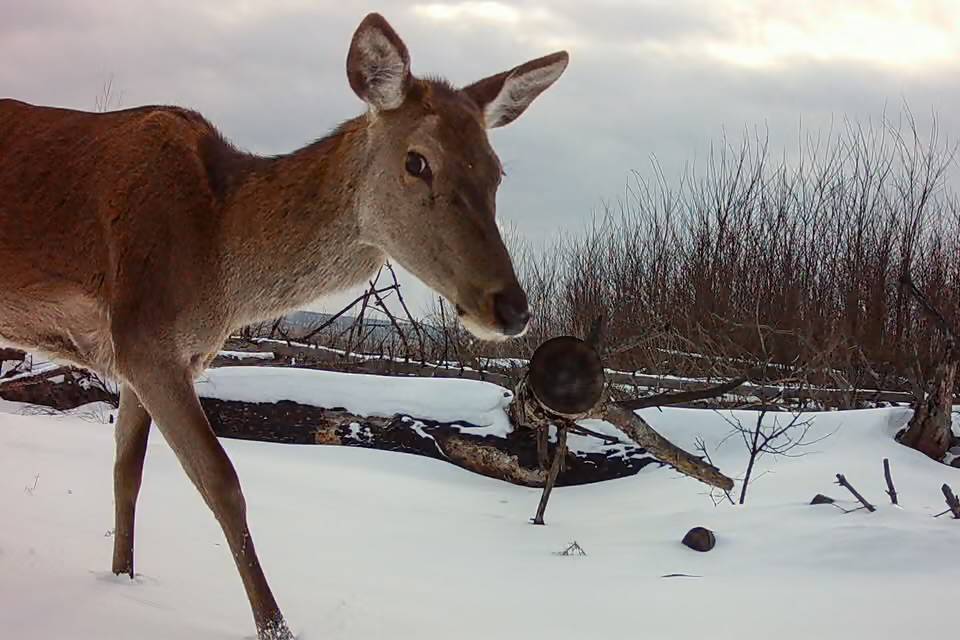
A wild deer walks in front of a camera trap in the Chornobyl exclusion zone, Ukraine. High radiation levels mean humans cannot live there, but wildlife populations have rebounded, with animals such as wolves, horses, lynx, horses, moose and dogs thriving. Researchers have recorded some changes in their welfare due to radiation exposure – birds, for instance, are more likely to develop cataracts – but they have not died off en masse, as some expected Photograph: Chornobyl Radiation and Ecological Biosphere Reserve/APShareA capybara and its cub cool off in the Pinheiros River in São Paulo, BrazilPhotograph: André Penner/APShareAn extreme closeup gives a grasshopper’s-eye view of a rain-speckled clover leaf in Oregon, USPhotograph: Robin Loznak/Zuma Press Wire/ShutterstockShareLate Easter surprise … two of three baby rabbits which were rescued after being found on a drilling rig in the North Sea. It is thought the bunnies had taken up residence in an offshore container in Dundee, having found a nice warm place to hidePhotograph: New Ark Wildlife Rescue/PAShareA well-insulated wild yak roams the Bamoqongzong extinct volcanic cluster area in the Changtang national nature reserve, southwest China’s Xizang autonomous regionPhotograph: Xinhua/ShutterstockShareToasty warm … stray cats curl up in an abandoned simit cart, which was once used to sell bagel-like snacks on the streets of Istanbul, TurkeyPhotograph: Anadolu/Getty ImagesShareA sportive lemur (so called, apparently, for its agility) perches on a tree in the Spiny Forest, Madagascar – one of the 200 most important ecological regions in the world, according to the World Wildlife Fund. This species of lemur is found only on the islandPhotograph: Anadolu/Getty ImagesShareWild boar in Shenzhen, southern China. The heavily urbanised area has been encouraging wildlife by developing ecological trails and building eco-friendly facilitiesPhotograph: Xinhua/ShutterstockShareGrey seals rest on a sandy islet in the Baltic Sea as the sun begins to set near Mikoszewo, PolandPhotograph: AFP/Getty ImagesShareA Barbary macaque chewing on soil in Gibraltar. Monkeys there have learned that swallowing soil can quell upset stomachs caused by eating sweet and salty snacks offered by or stolen from holidaymakers, a Cambridge University study suggests. The dirt is thought to help line the gut to prevent irritation from the sugar and fat in chocolate, crisps and ice cream. Scientists believe it also provides bacteria and minerals absent from junk foodPhotograph: Martin Nicourt/Gibraltar Macaques Project/PAShareSplit-level home … a baya weaver bird works on its impressive nest in Assam, IndiaPhotograph: Anuwar Hazarika/NurPhoto/ShutterstockSharePrzewalski’s horses in the Kalamaili nature reserve, northwest China. The horse was once extinct in the wild in China, but is thriving thanks to a reintroduction programmePhotograph: Xinhua/ShutterstockShareA walrus has a rest in a harbour in north-east Scotland, UK. It’s believed to be the same one that was recently seen injured in Orkney, and it is now thought to have swum to mainland Scotland. The public have been warned to stay away and let it recoverPhotograph: Cameron/BDMLR Medic/PAShareZebras graze at the Hells Gate national park in the Great Rift Valley, KenyaPhotograph: Xinhua/ShutterstockShareA tiny harvest mouse makes itself tall in York, UKPhotograph: Tony Nellis/SWNS